Private Office Folsom: A Room With a Door
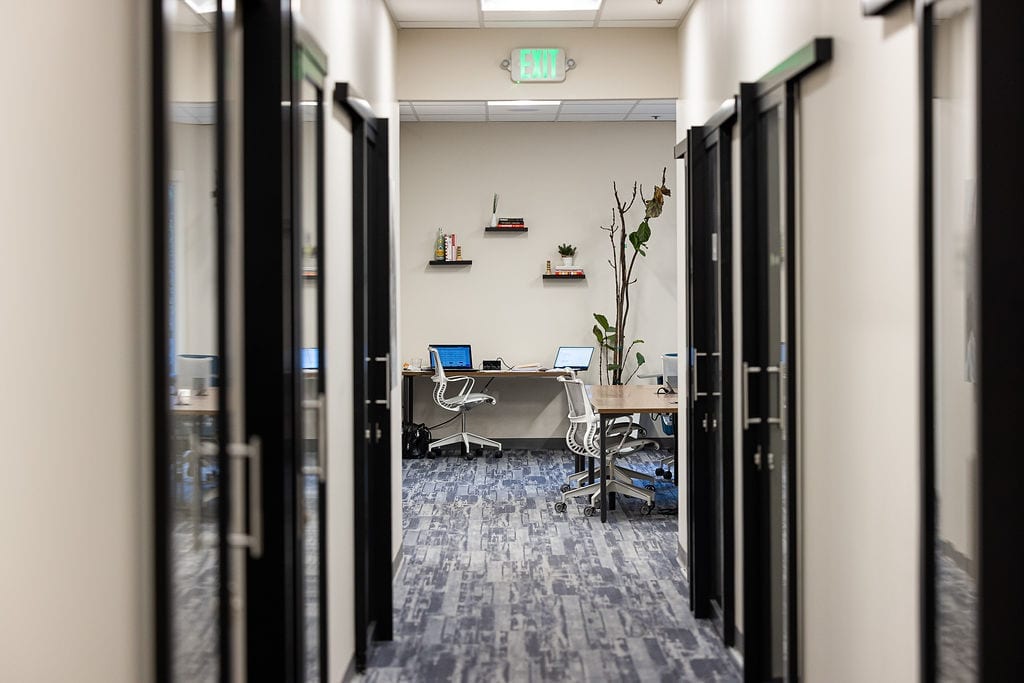
A private office in Folsom suits a consultant, fractional operator, or remote executive whose work depends on frequent client calls and a reliable place to speak privately. A door can separate confidential conversations from shared activity, while a consistent work setting keeps professional calls from depending on household conditions. For people near Historic Downtown Folsom or elsewhere along the Hwy 50 AI Corridor, the decision is less about looking established and more about whether privacy and a clear work boundary matter often enough to justify a room of your own. If calls are occasional, a private office may be more than you need. If they shape most workdays, it can remove a recurring source of friction.
When does a private office make sense for one person?
A private office is worth considering when you need a private setting on a regular basis, not just for the occasional important call. It can give you a consistent place to work, speak with clients, and keep work separate from home.
The clearest case is a workday built around conversations: consulting, fractional leadership, advising, or managing a remote role with frequent one-to-one calls. You may need to move between video meetings, focused work, and conversations about information that shouldn’t be discussed in a shared setting. Having a room to return to can make those transitions simpler.
A private office can also help when your work setup at home changes from day to day. A family member’s schedule, a delivery, or background noise can be hard to predict. If those interruptions repeatedly land during client conversations, the problem isn’t solved by a better camera angle. A separate workplace gives you another option.
That doesn’t mean a private office is automatically the right choice for every solo professional. If most of your work is independent and your calls are infrequent, coworking or working from home may be enough. Start with the problem you need to solve, rather than assuming a more private setup is always better.
What changes between a home office, coworking, and a private office?
The main difference is how much control you have over privacy and separation from home. The right setup depends on whether you need a room for frequent private work or simply a change of setting.
| Setup | Privacy for calls | Work boundary | May suit you when |
|---|---|---|---|
| Home office | Depends on your home | Work stays at home | Your environment is reliably quiet |
| Coworking | Shared setting; check call options | Work moves outside the home | You want a professional place to focus |
| Private office | A separate room; acoustics vary | A distinct place for work | Private calls are part of your routine |
A table can make the choice look simple, but the details of your day matter. In coworking, you work around a shared environment, so check what options are available when a call needs privacy. In a private office, a door creates a boundary, but it doesn’t guarantee soundproofing. The room, walls, and surrounding activity still affect what you can hear and what others can hear.
If you’re comparing more than these three setups, this guide to coworking and other workspace options in Folsom can help you think through the broader tradeoffs. The useful question is not which option sounds best in general. It’s which one reliably supports the work you do.
How can a private office help with client calls in Folsom?
A private office can give you a consistent setting for calls, with fewer shared-environment distractions than an open work area. In Folsom, that can be useful when your work and client relationships are based along the Hwy 50 AI Corridor.
The value is practical. You can set up your work materials once, start a call without searching for an appropriate corner, and return to focused tasks afterward. A stable setting also reduces the need to explain changes in background noise or surroundings to clients. Those details don’t replace the quality of your work, but they can make a busy day easier to manage.
Remote and hybrid work are part of the wider picture, though national figures cannot tell you what one local professional needs. The U.S. Bureau of Labor Statistics’ 2025 annual average table on telework status reports that 22.4% of people at work teleworked or worked at home for pay. That figure is national context, not proof that a Folsom consultant needs a private office. Your call schedule, privacy needs, and home setup are better guides.
Folsom’s place in the regional business community may matter, too. If your work connects with founders or remote teams in neighboring communities, a steady local base can make the workday feel less improvised. For wider context on the region, see what the Hwy 50 AI Corridor means for local businesses.
How can you tell if you’ll use a private office enough?
Look at your actual routine before you decide. A private office is a better fit when its privacy and separation would solve recurring problems, not just occasional inconveniences.
Review a typical work calendar. Which calls need privacy? How often do home interruptions affect meetings? Do you need a consistent place to work between calls, or would a room be useful only for a small part of your week? The answers will help distinguish a regular need from an occasional one.
There’s an honest tradeoff: you can commit to a private office and then barely use it. That can happen when the idea of having a professional base feels appealing but the daily routine hasn’t changed. Before you decide, imagine a normal week, including the days when you have no client calls. Would you still choose to work there? If not, another arrangement may be a better match.
You can also test the practical details during a tour. Sit where you would work. Check how the door closes, what you can hear from outside, how the room feels on a video call, and whether the layout works for your equipment. Don’t assume that every private office has the same feel or acoustics. Choose based on what you can see and experience, not on the word “private” alone.
What should you look for in a private office in Folsom?
Look for a room that fits the work you actually do: the calls you take, the materials you use, and the routine you want to keep. A good fit should make your workday more dependable without requiring you to use the office in a way that doesn’t suit you.
For a consultant or remote executive, privacy is only part of the decision. Consider whether the setting supports focused work between calls, whether the room gives you a comfortable place to meet online, and whether the location works for your regular travel around Folsom and nearby communities. If you work with clients across El Dorado Hills or Rancho Cordova, think about whether Folsom is a practical base for those relationships.
Granite City Workspaces offers private offices in Folsom. If a room of your own seems suited to your routine, review the private office options at Granite City Workspaces. Find your corner in Folsom, and choose a setup that supports the work you do most often.
What else might you want to know before choosing?
Is a private office soundproof?
A private office has a separate room, but that does not guarantee soundproofing. Check the room’s acoustics and surrounding noise during a tour.
Would coworking work if I only take occasional private calls?
It may. Consider a shared coworking setting if you mainly need a place to focus and only sometimes need a quieter setting for calls.
What should I check during a private office tour?
Consider the room layout, the work surface, what you can hear from outside, and how the room feels during a video call. These details can help you decide whether the office fits your routine.
Do I need a private office if I work remotely?
Not necessarily. A private office is most useful when regular calls, privacy, or separation from home are important parts of your work.